I’m still thoroughly confused as to what you’re asking for, OP.
Can you give a link or example of it being used on a track or at least demonstrated in a video? I’ve played guitar for 30 years and have no idea what you’re talking about.
I’m still thoroughly confused as to what you’re asking for, OP.
Can you give a link or example of it being used on a track or at least demonstrated in a video? I’ve played guitar for 30 years and have no idea what you’re talking about.
Don’t know if thats your or OP’s kind of genre but here is an example of what I think is asked for https://youtu.be/J5m1sxzUDu8
And in this video it’s explained very well what saturation is / does: https://youtu.be/n6ew5mMN2pQ
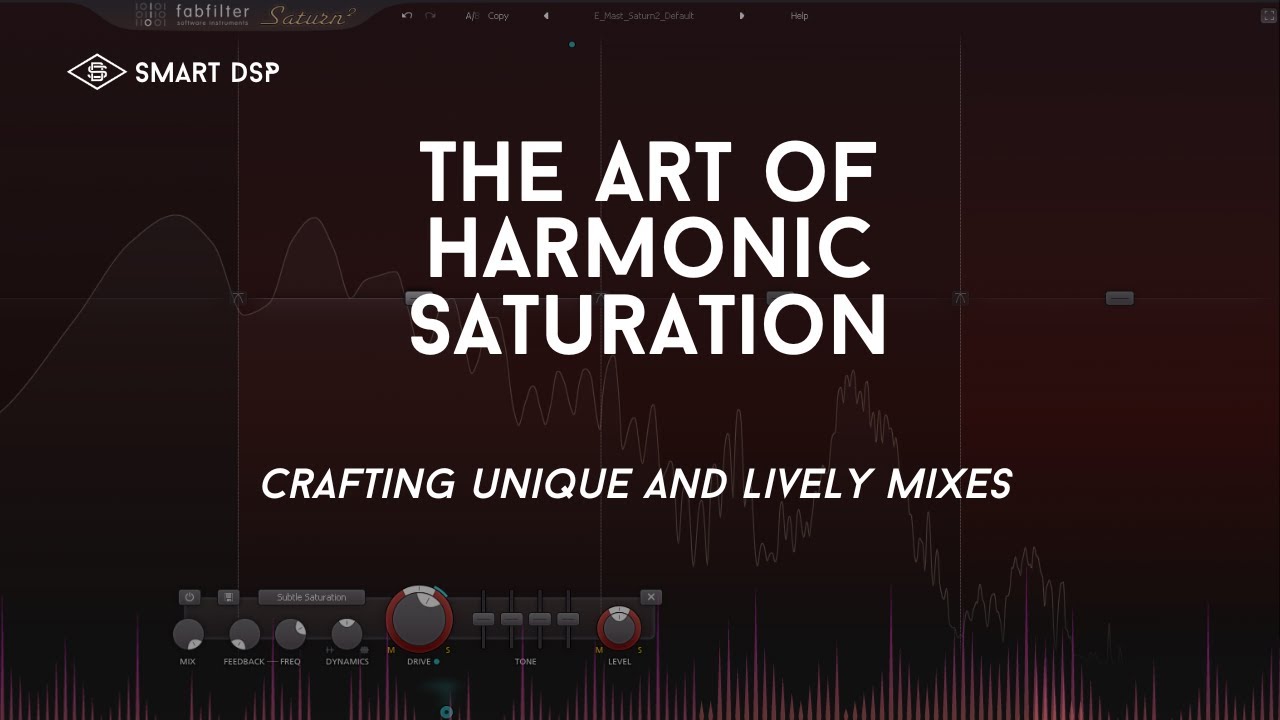
Once again this is applying saturation/distortion with emulation of hardware gear. The Fabfilter pro plugin does multi band saturation but the only difference is that it’s applying different amount and kind of distortion to different frequency bands. I do have some of those plugins and what they do is emulate the different ways analog hardware distorts a signal, some more subtle some harsher.
Splitting hairs here, but suggesting harmonic saturation is not distortion, and then posting an example video where the narrator immediately calls it distortion, goes to show how little understood the effect is.
I currently have Fabfilter Saturn 2, Klanghelm IVGI2, UA Oxide Tape Recorder, and UA Verve Analog Machines. Ableton Live has a stock “dynamic tube” plug-in. All of them offer some form of saturation based on an emulation of hardware. Korneff Audio’s Pawn Shop Compressor also does this within its “hidden” control set (awesome for bass guitar and drums).
Anyway, yes, I would like to see harmonic saturation added to the QC. Giving this a vote.
I use the delays for this quite often, usually between my amp and cab block. I would call this effect an expander though, rather than harmonic distorter. It adds a bit of wideness to your sound which can be used as an effect at itself or to beef up some of the more dull amps in the QC.